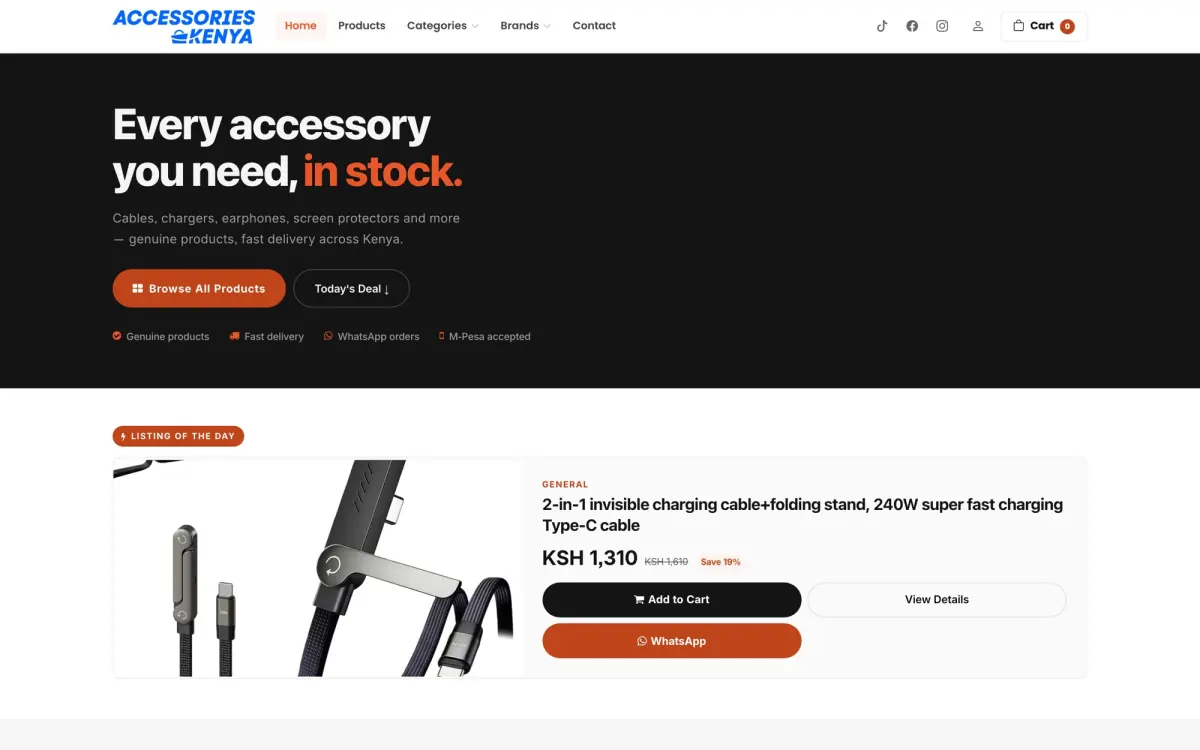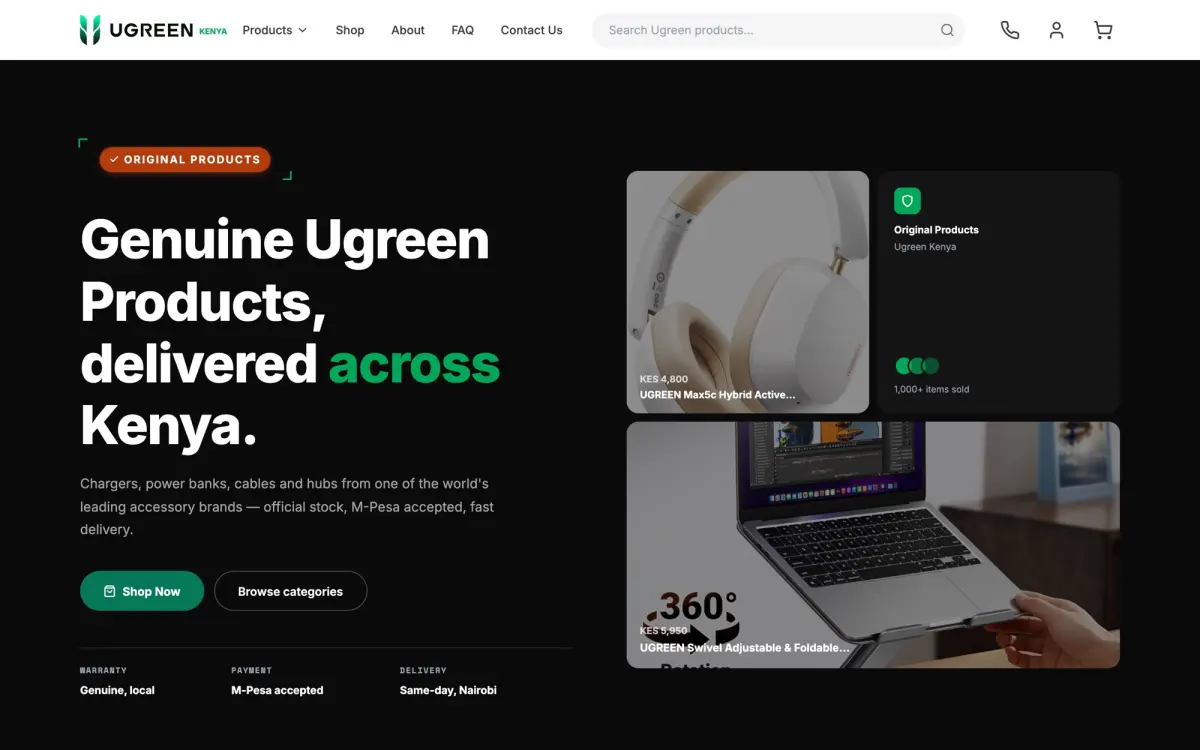
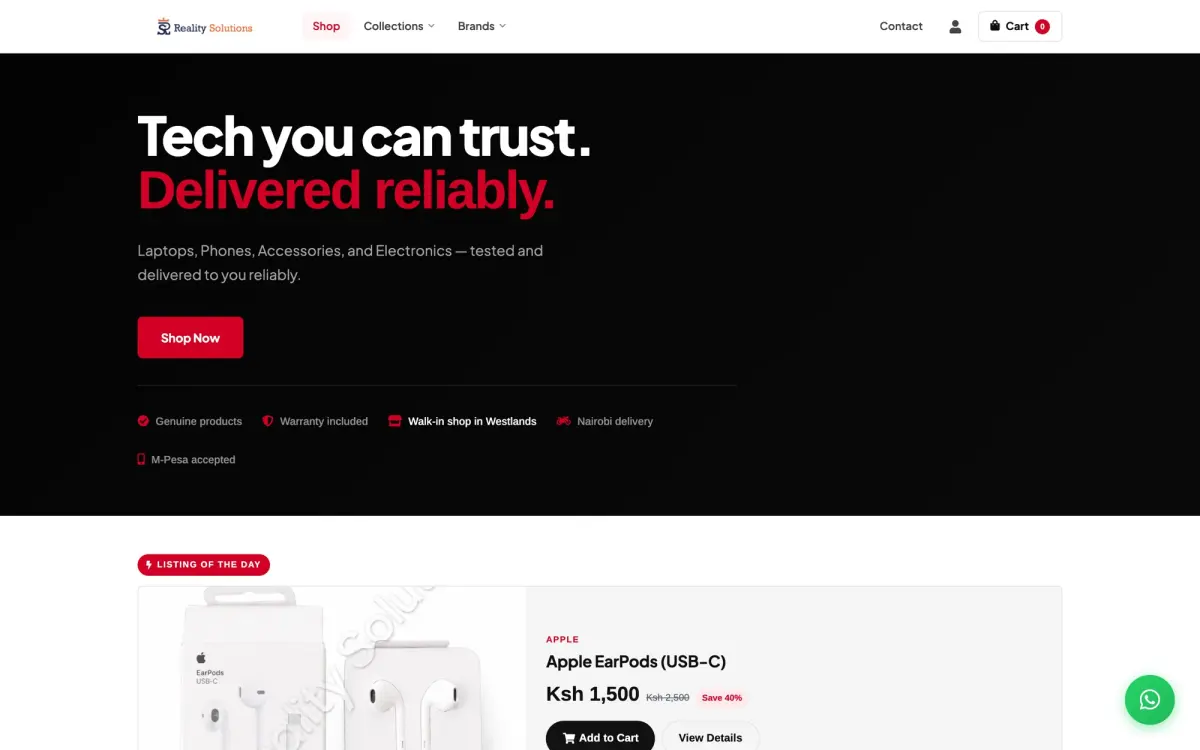
Reality Solutions sells laptops, phones, and accessories in Nairobi. It is also the original codebase behind two other storefronts we have since built for the same team under different brands — Accessories Kenya and Ugreen Africa run on the same catalogue and admin platform, each with its own branding, categories, and customer experience.
The problem
Reality Solutions needed a real product catalogue — categories, sub-categories, and brands, not a flat product list — and a way to get that inventory in front of buyers beyond their own storefront. Listing manually on Google Shopping and Jumia alongside running the website was two full-time jobs' worth of duplicate data entry.
Later, when the same team wanted to launch a second and third storefront under different brands, the obvious path was to rebuild from scratch each time — three separate codebases, three admin panels for the same team to learn, and three times the maintenance for every future feature.
What we built
We built Reality Solutions on a three-tier catalogue — category, mini-category, sub-category — with a full admin panel for product, pricing, and inventory management, plus a product recommendation engine and PDF invoice generation.
The catalogue syncs directly to Google Merchant Center, with its own audit and resync tooling so listings stay accurate without manual re-uploads, and exports to Jumia's marketplace format on demand — the same inventory reaching multiple sales channels from one source of truth.
When the business needed a second and third storefront, we extended the same platform instead of rebuilding: Accessories Kenya and Ugreen Africa run on the same underlying catalogue and codebase, each with its own brand-specific taxonomy, product set, and customer experience — one platform, three retail brands.
Reality Solutions is live at realitysolutions.co.ke